
PRINTMAKING
My First Scarab: Exploring Printmaking
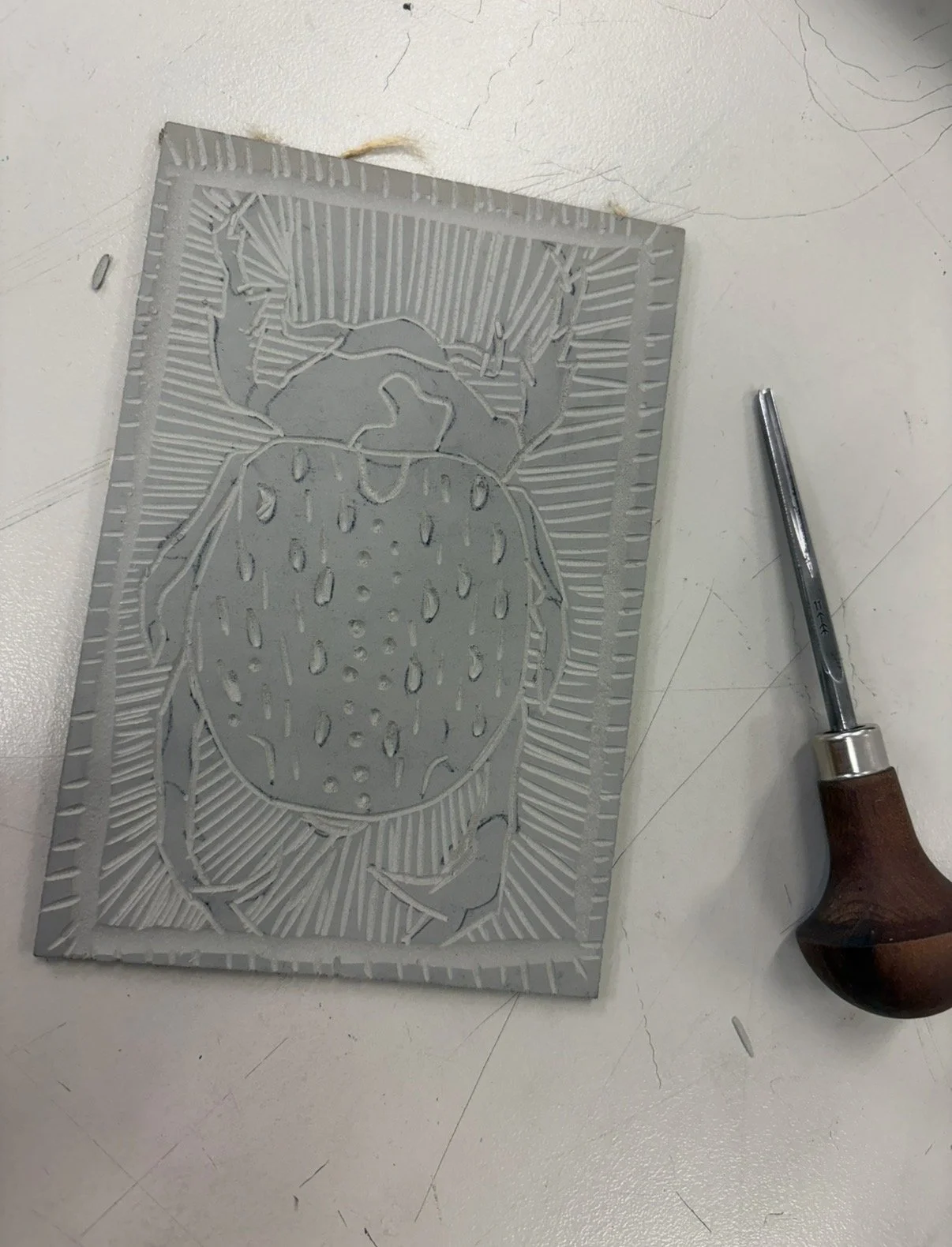
As part of my Visual Arts studies, I have been exploring printmaking, and this scarab was my first experience of creating a carved relief print. I really enjoyed discovering how an image changes as it moves through the different stages—from the original drawing, to carving the block, applying ink and finally pulling the print.
I began by transferring my scarab design onto the printing block and then used carving tools to carefully remove the areas that I wanted to remain white. I wanted the scarab to have a strong graphic quality, so I experimented with line, pattern, texture and repetition.
The background was particularly enjoyable to carve. The repeated lines create movement around the beetle and help distinguish its body from the surrounding space. I also used small carved marks and dots across the shell to create texture and detail.
One of the biggest things I learned was that carving requires patience and control. Once an area has been removed, it cannot simply be put back, so I had to think carefully about positive and negative space as I worked.
The First Prints
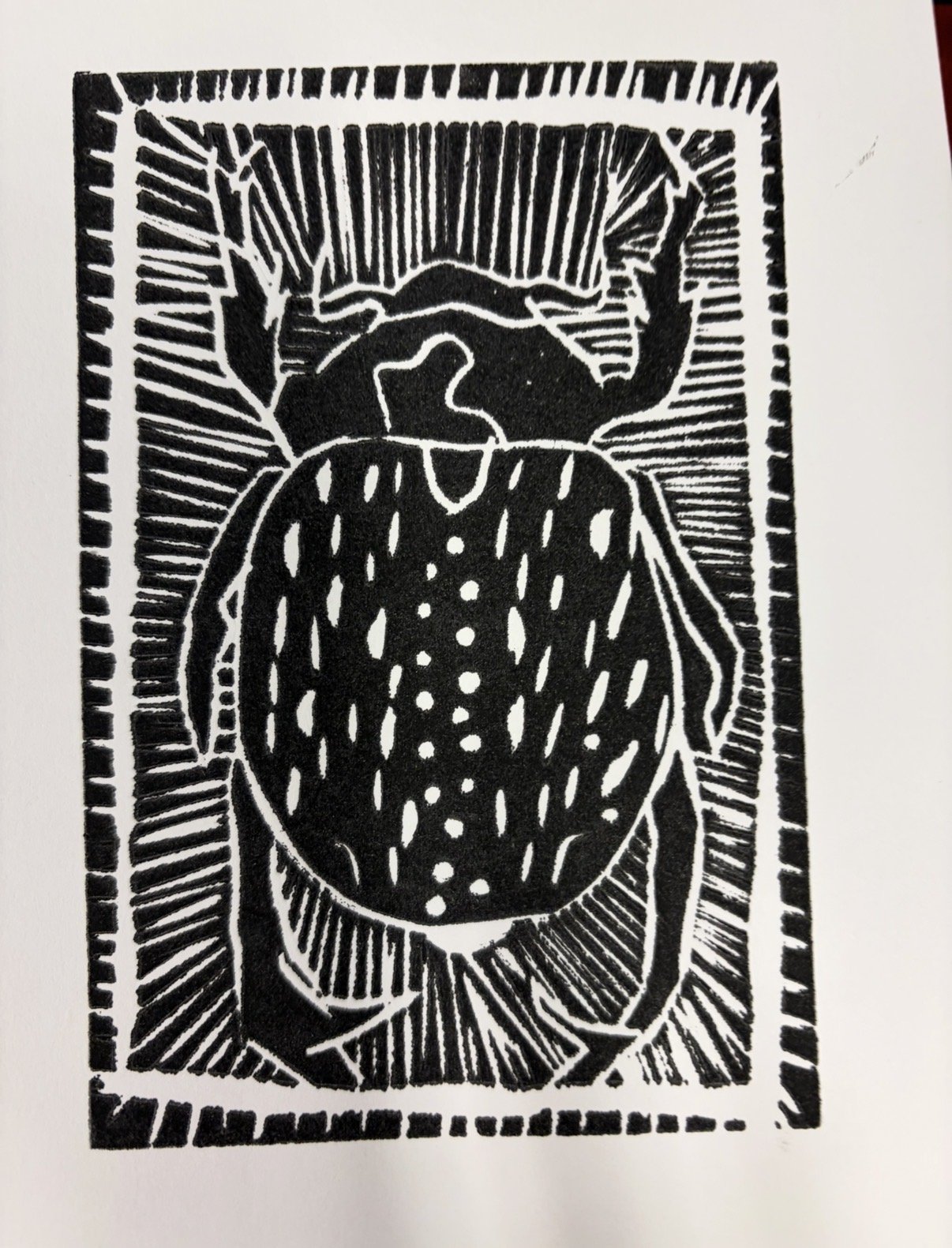
Seeing the first black print was probably the most satisfying part of the process. Until the block is inked and printed, it can be difficult to imagine exactly how all those carved marks will work together.
The black ink created a very bold result and allowed me to clearly see the strength of the design. I could also see the handmade qualities of the print—the slight variations in the lines, edges and ink coverage. Rather than seeing these as imperfections, I think they give the print character and show the process involved in making it by hand.
Experimenting With Colour
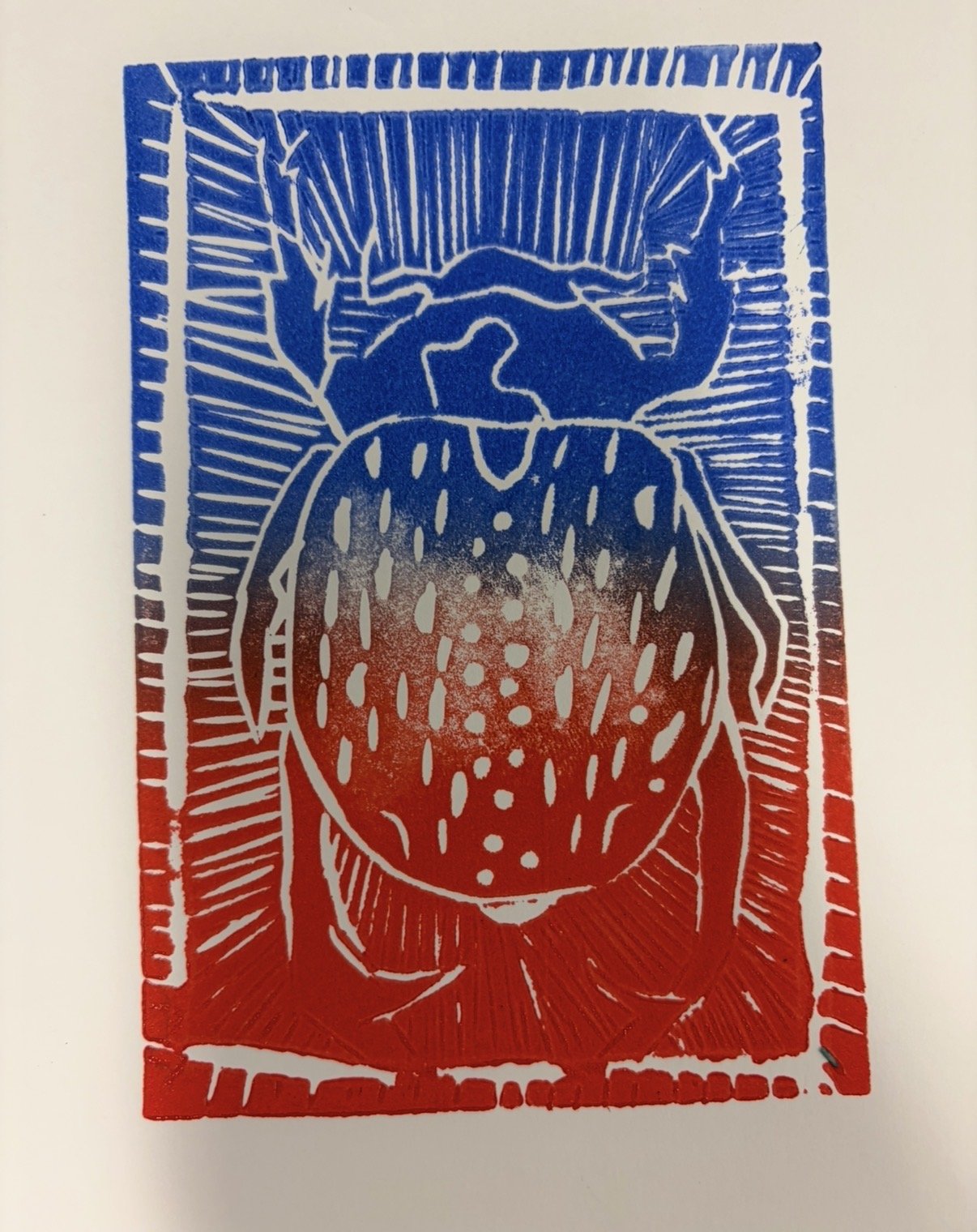
After printing the scarab in a single colour, I experimented further with blue ink and then with a blue-to-red gradient.
The gradient print completely changed the feeling of the image. The cool blue moving into the warm red created greater depth and energy while still retaining the strong graphic qualities of the original carving. It demonstrated how the same printing block can produce very different results simply through changes in colour and ink application.
What I Learned
For my first scarab print, I was pleased with how much detail I was able to achieve. The process taught me that printmaking involves a balance between planning and unpredictability. You can carefully design and carve the block, but pressure, ink, paper and colour can all affect the final result.
I also learned that every print does not have to be identical. Small differences are part of what makes hand printing interesting.
This first scarab has made me want to continue experimenting with printmaking—particularly with colour combinations, layered printing, different papers and more detailed natural forms.
There is something very satisfying about carving a simple block and then watching the image come to life when the paper is lifted for the first time.
